


Before I begin, a brief note.
This essay is about how communities respond when something breaks open in public view. Canadian Prime Minister Mark Carney recently used the word rupture to describe the strain now visible in the current international order. The idea applies just as clearly at home, where long-standing norms and expectations, our own social order, is being tested in everyday life.
What follows is a description of what people do, in different places, when they decide not to look away as core values and coercive power come into conflict.
___________
On a winter night in Cairo in 2011, thousands of people stood shoulder to shoulder in Tahrir Square, holding up their phones. Not to scroll. Not to distract themselves. But to record faces, chants, and the movement of security forces at the edge of the crowd.
The internet would go dark more than once in the days that followed. Power was cut. Signals failed. But people kept recording anyway. They passed memory hand to hand. They uploaded when they could. They believed that what mattered was not only what was happening, but that others, somewhere, would be able to say I see this. I see you.
Much the same has happened in Iran in recent months. As protests spread and citizens recorded what was happening on their phones, the regime chose to shut down the internet and disrupt information flows. Governments exercising coercive power, like the one in Tehran, understand that maintaining order is not only about controlling the streets, but about shaping what can be seen, shared, and believed.
What unfolded in Egypt, Iran, and elsewhere reveals a deeper pattern in how people respond to crisis. When confronted with rupture or threat, they act socially rather than individually, using shared witness to limit the ability of others to obscure their lived reality. Smartphones did not invent collective witness. They compress and accelerate something human communities have relied on for millennia.
Long before written records, societies processed harm through shared presence, oral tradition, and ritual. As literacy spread, pamphlets, court records, and newspapers extended shared recognition beyond those directly involved. Broadcast journalism later carried these moments into living rooms and public squares.
When state troopers attacked voting rights marchers on the Edmund Pettus Bridge in Selma, Alabama in March 1965, the violence was seen, recorded, and carried into homes across the country. The same was true in Birmingham later that month, where authorities turned fire hoses and police dogs on children. Those acts were meant to intimidate and disperse. Instead, widespread awareness of what took place created a shared moral orientation that made competing narratives untenable. What changed was not simply opinion, but the capacity and will to pursue an inclusive vision of American society. The Voting Rights Act was signed into law by August of that year.
In Minneapolis, during the killings of Renée Good and Alex Pretti, people did what people do now. They reached for their phones, filming and sharing in ways that were immediate, distributed, and global. They did what research on crisis, trauma, and sense-making shows people do when they encounter violence that cannot be normalized. They seek ways to reveal what has shifted and to mount a collective response.
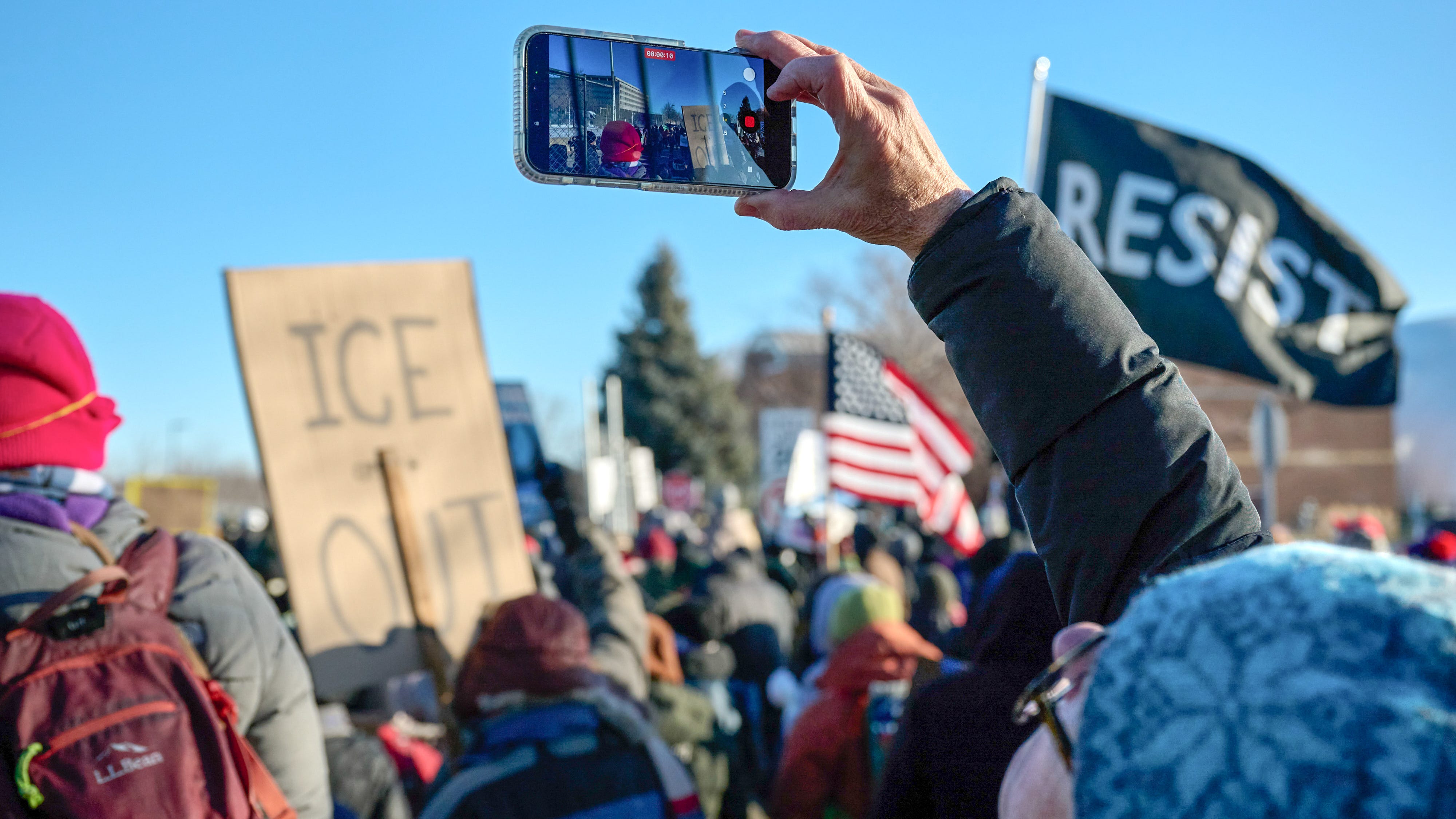
Theorists such as Émile Durkheim and Karl Weick describe how what follows can appear surprising, even irrational. People take risks they could avoid. They leave their homes when staying inside would be safer. They discount personal risk and heighten their sense of obligation to others, much like the deeply rooted social instincts Nicholas Christakis describes in Blueprint: The Evolutionary Origins of a Good Society. Under pressure, these instincts guide communities toward cooperation, mutual aid, and collective effort to restore sense and social order.
It is also why those who have the most to lose from this kind of coordination so often resort to intimidation and public displays of force. Not simply to punish, but to fragment collective response by making participation dangerous, association suspect, and shared resistance costly.
Images from Minneapolis have brought into focus a collision between coercive tactics like these and citizen-led efforts to preserve the values that sustain civic life in that city. The Italian thinker Antonio Gramsci described moments like this as an interregnum, a time when civic values are ignored as coercive authority works to entrench its power. Many have paraphrased Gramsci to describe this period as “a time of monsters” - when violence and confusion fill the gap left by eroding norms.
The central question in an interregnum is not simply what will survive the collision, but what must be preserved so that something viable can take shape at all. What moments like this require is the protection of social ties, a shared reality, and dignity while the future remains unsettled.
In history, there are times when durable, collective effort during interregnums produced more viable futures. In Poland, the Solidarity movement sustained dense networks of mutual obligation despite repression, preserving enough trust and coordination to force a negotiated transition to democracy in 1989. In South Africa, broad-based civic organization and disciplined collective action maintained social coherence long enough to bring about a peaceful end to apartheid in 1994. In the Baltic states, sustained nonviolent mass participation between 1988 and 1991, together with a shared commitment to democratic transition during the final years of Soviet rule, enabled independence without large-scale internal violence. In each of these cases, communities managed to preserve trust, coordination, and a shared understanding of what needed to be carried forward into an uncertain future.
There are also lessons in the cases where coercive authority prevailed. In Iran, mass arrests, internet shutdowns, and targeted state violence directed at civic uprisings appear, at least for now, to have broken sustained collective insistence on social protections and human rights. In Hong Kong, the criminalization of civic ritual has hollowed out once-vibrant forms of public solidarity. In Russia, selective enforcement and severe sentencing have elevated the cost of coordination and dissent. In Belarus, Venezuela, and Myanmar, terror-based tactics have fractured civic networks. In Egypt, the steady erasure of public civic life has left little space for collective action to re-form. Across these cases, the pattern is consistent and increasingly recognizable at home. Mutual aid is criminalized. Coordination is recast as inauthentic or a threat. Visible actors are isolated and discredited in order to push people back toward private fear and dislocation. Over time, suppression has succeeded not by erasing what people see, but by convincing them they are seeing it alone.
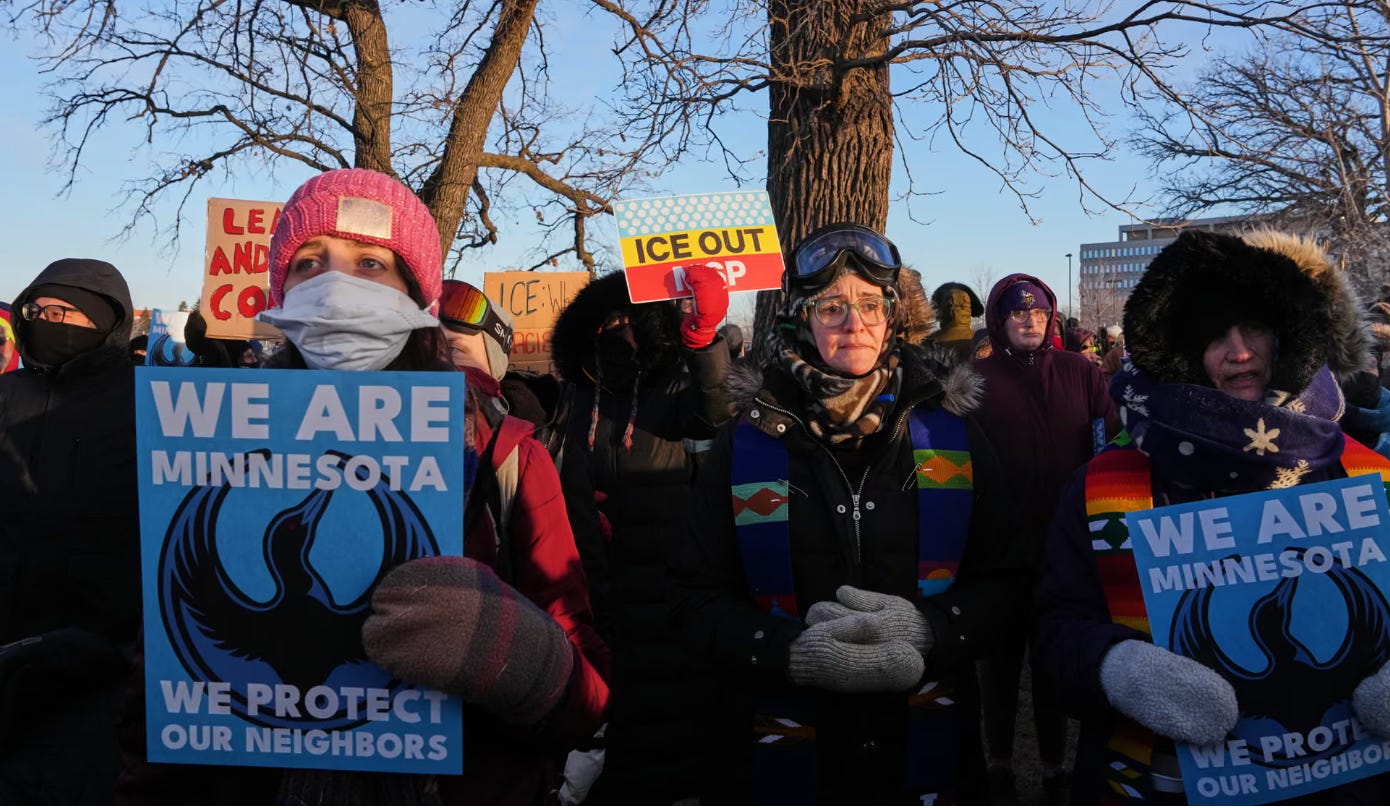
Responding to harm requires courage, especially as the abuse of power escalates. But it does not require heroism or ask people to become someone they are not. It asks them to trust their instincts within the communities they value. Collective response works not because everyone acts alike, but because people do what they can and stay connected while they do it. Some record and share. Some organize. Some care for others. Some look for people who have disappeared.
Some feed the hungry. Others offer time or resources. Some simply keep dignity in view while making sure no one is left alone. This is public service at its most elemental.
In moments shaped by fear and spectacle, it can seem as though only dramatic action matters, and that anything short of it is a form of failure. I am wary of that conclusion, because it leads easily to despair. Just as consequential is whether communities quietly preserve trust, networks of mutual obligation, and restraint in how they act.
Recently, I listened to an interview with the Jesuit priest and author Reverend James Martin. I was raised Catholic, though I am not religious in any formal sense today. But something he said stayed with me. Asked what a call to action means in a moment like this, he struggled before saying that when Jesus left the earth, there were still sick people in Galilee and Judea. He did not heal everyone. He healed the people in front of him. We want grand answers, and we do need to think globally, he said, but the work often begins one person at a time.
In communities under pressure, I have seen that the smallest unit of resilience is not the crowd or the movement, but the relationship. One person checking in. A conversation that does not harden. A decision to stay engaged when withdrawal would be easier. This work rarely resolves in a single moment. It is carried forward, unevenly and imperfectly, through acts of attention and mutual support. Over time, those acts shape what communities are able to preserve, and the kind of future they make possible.


